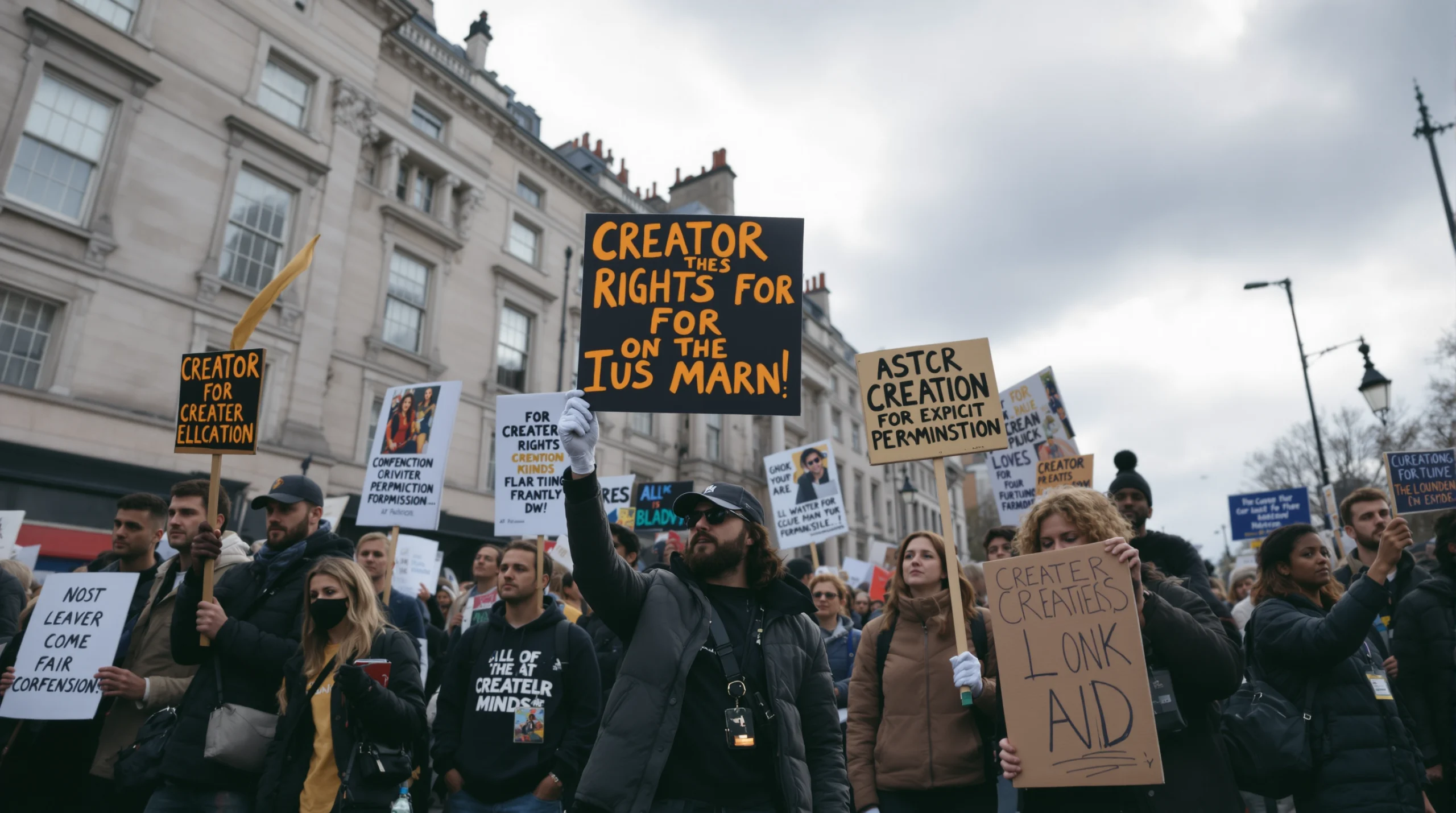
Ever found yourself questioning the fuss surrounding AI and copyright? Suddenly everyone seems to be talking about it. This isn’t just any tech drama; this is about *The AI Copyright Debate: What’s Really at Stake?* Let’s dive straight in and see what’s got creators so fired up.
Why Are Creative Minds Concerned?
Imagine you’ve invested years crafting an incredible piece of art. Out of nowhere, tech firms swoop in, using your work without giving you a nod. Sounds unfair, right? That’s the crux of the matter for creators.
Currently, in the UK, debates rage on as the government discusses proposed changes to copyright. The worry is that these changes might allow big tech to use copyrighted materials for AI training without explicit permission. Imagine the shock for an artist who suddenly sees their work plastered on websites run by AI.
Who’s in the Ring?
Enter the Creative Rights in AI Coalition. They’re not standing by. Organisations like the Society of Authors and the Publisher’s Association have teamed up. Their mission? Ensure creators aren’t shortchanged.
- They demand fair compensation.
- Explicit permission before use.
A friend of mine, a freelance illustrator, experienced this firsthand. She found her artworks across AI-generated sites without any warning or payment. She felt robbed.
The Government’s Stand
So, what’s the government proposing? It revolves around something dubbed the “text-and-data mining (TDM) exception.” Here’s the breakdown:
- AI companies could use copyrighted materials without prior consent unless creators opt-out in advance.
- Promises are made for transparency. Rights holders should know who’s using their works and how.
This feels like letting strangers rummage through your cupboard, only unless you’ve padlocked it shut first.
But, let’s give credit where due. The government claims they’re trying to balance innovation with the protection of creator rights. Their goal is for creativity and AI to grow side by side.
Creators Sound the Alarm
For those in the creative industry, they’re cautious. “Our work isn’t just there for the taking,” they argue.
They insist on:
- Explicit permission as a must.
- Proper compensation lies at the heart of their demands.
From the perspective of creative folks, this isn’t just about compensation. It’s about respect for their craft and safeguarding their livelihood.
Looking Ahead: The AI Copyright Dispute
The big question? Can creative industries and AI coexist peacefully? Ongoing conversations between the government, tech firms, and the creative community are key. While compromise feels a distant dream, these discussions are vital.
In a world rapidly reshaped by AI, it’s crucial not to leave creators feeling left out in the cold. So, how does the future look?
Globally, the way the UK handles this could set the tone for other nations. It’s essential that as creators and tech giants rub shoulders, they find common ground.
By learning from the UK’s approach, countries can form smarter strategies, ensuring creators and AI can walk side by side into an evolving future.
To dive deeper, you might want to check out Rewardful. It’s a tool that businesses are turning to for better AI integration, allowing you to affiliate, manage referrals, and see how you can benefit from AI in business.
Final Thoughts: Why This Debate Matters
In wrapping up, *The AI Copyright Debate: What’s Really at Stake?* is capturing attention worldwide. This isn’t only a UK issue; it’s a global one with implications for creators everywhere.
A great example of how AI technology is quickly shifting landscapes is the recent innovations by Samsung in their Galaxy series. Insightful studies like these shed light on how tech evolves while ensuring creativity remains respected.
As we watch this debate unfold, it’s time we all get involved. After all, this isn’t just about tech versus creativity. It’s a conversation shaping our digital future.
In conclusion, what are your thoughts? Should your masterpiece fuel AI learning without your say-so?