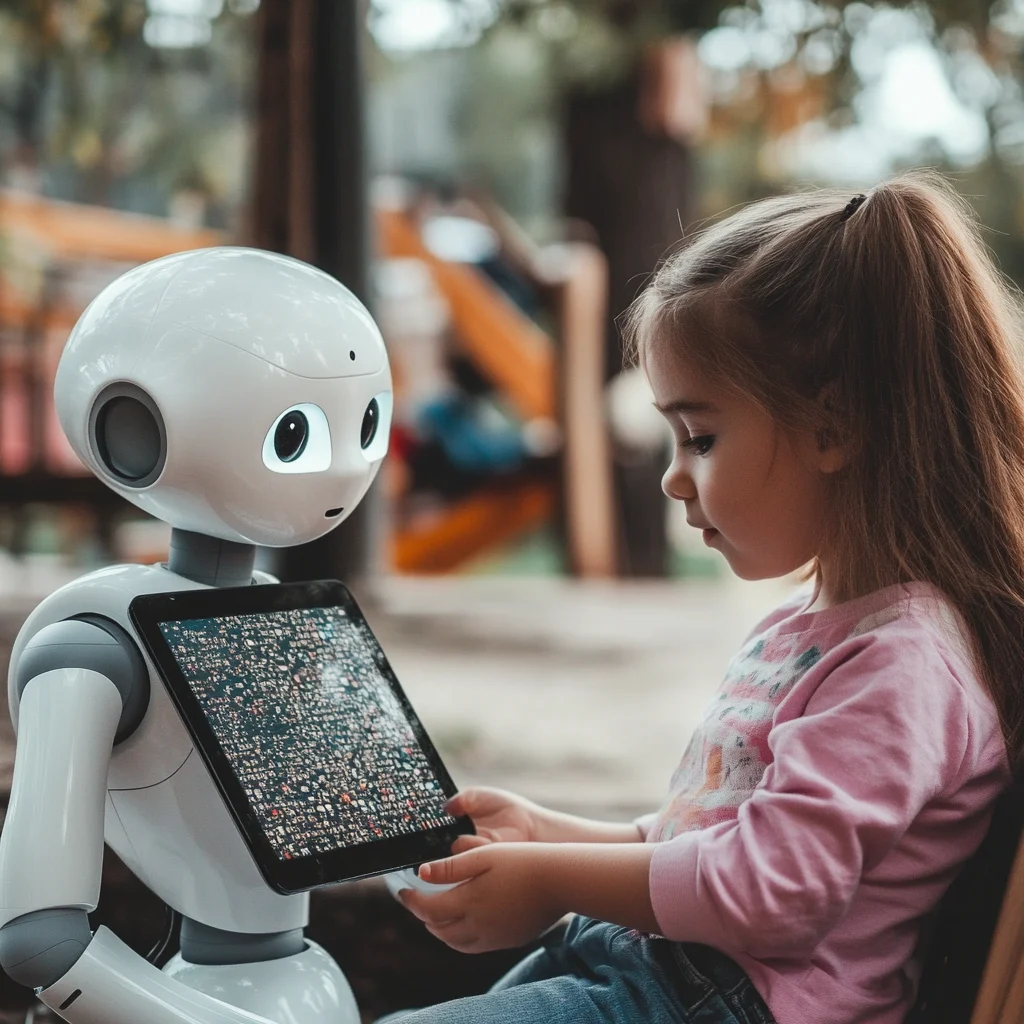
Artificial Intelligence (AI) is no longer a concept of the future, it’s reshaping the present. From schools to workplaces and public services, AI’s influence is profound. But is it a threat or a tool? Let’s explore how AI is impacting these sectors and what it means for us.
AI in Education: Transforming Classrooms
Imagine walking into a classroom where AI tools like ChatGPT are guiding lessons. This isn’t science fiction; it’s happening now. In Australia, students are learning alongside AI to prepare for a tech-driven future.
Learning Beyond Textbooks
Students aren’t just passively using AI; they’re engaging with its quirks and biases to understand its limitations. Programs like EdChat, an AI chatbot developed by Australia’s Department of Education, ensure that classroom conversations remain appropriate and educational. By learning how AI operates, students are also gaining critical thinking skills and developing an understanding of ethical considerations surrounding technology.
This proactive approach equips kids to navigate a world where technology is integral to daily life and future careers. Educators are also finding ways to blend AI tools with traditional teaching methods, creating more dynamic and interactive learning environments.
AI in Employment: Adapting to Change
The workplace is where AI’s impact is most debated. Will it replace jobs or create new opportunities? The answer is nuanced.
Job Displacement vs. Adaptability
Experts like Peter Coy predict that by 2027, AI might outperform humans in many tasks, with the likelihood increasing significantly by 2047. Yet, not everyone agrees. Economist Bill Conerly emphasizes that the effect of AI depends on the industry and region. For example, repetitive tasks in manufacturing might be automated, while creative and interpersonal roles could remain reliant on human expertise.
The key takeaway? Adaptability is essential. Workers and industries must evolve to coexist with AI, using it to enhance rather than replace human potential. Governments and organizations are also investing in retraining programs to help workers transition into new roles where human skills complement AI capabilities.
AI in Public Services: Improving Everyday Life
AI is revolutionizing public services, making them faster and more efficient. From emergency response to public transportation, its applications are game-changing.
Faster Emergency Responses
In New York City, the Fire Department uses AI-powered route planning in collaboration with the C2SMARTER consortium. This innovation ensures emergency vehicles reach their destinations as quickly as possible. By analyzing traffic patterns and real-time conditions, AI helps first responders save critical minutes, which can mean the difference between life and death.
Smoother Public Transportation
In the UK, FirstBus employs AI to optimize bus schedules and reduce delays. These advancements show how AI can enhance everyday experiences, ensuring systems operate seamlessly. Passengers experience fewer disruptions, while operators benefit from more efficient resource allocation and maintenance scheduling.
AI Adoption: A Global Surge
Businesses worldwide are recognizing the potential of AI, leading to unprecedented adoption rates.
AI Usage Statistics
Over two-thirds of organizations have integrated AI into their operations. The use of generative AI surged from 55% in 2023 to 75% in 2024. Companies are seeing tangible benefits, driving this rapid adoption. From improving customer experiences to streamlining operations, AI is becoming indispensable across various industries.
AI is no longer optional; it’s a strategic asset for staying competitive in a fast-evolving market. This trend highlights the need for continuous innovation and investment in AI to maintain a competitive edge.
Innovations in AI: What’s Next?
Leading tech giants like Meta and NVIDIA are pushing the boundaries of AI innovation, shaping its future.
Game-Changing Projects
Meta: Rolling out Llama 3, an open-source large language model accessible to developers and researchers. This initiative democratizes AI, allowing smaller organizations and individual developers to leverage powerful tools for their own projects.
NVIDIA: Launching Project GR00T, a foundational model for AI and robotics that promises significant advancements in tech capabilities. This project aims to bridge the gap between AI and robotics, paving the way for smarter, more versatile machines.
These innovations are setting the stage for AI’s next evolution, offering tools that will redefine how we interact with technology. By making these advancements more accessible, companies like Meta and NVIDIA are accelerating AI’s integration into everyday applications.
FAQs: The Future of AI in Education, Employment, and Public Services
What is AI’s role in schools? AI is helping students learn about its workings, biases, and limitations. Programs like EdChat ensure safe and constructive AI interaction in classrooms. Additionally, it allows educators to personalize learning experiences, tailoring content to meet the individual needs of students.
Will AI replace all jobs? While AI may displace certain roles, adaptability and upskilling can mitigate these effects. Many industries will find ways to use AI as a complement to human workers. For instance, AI can take over repetitive tasks, allowing humans to focus on creative and strategic responsibilities.
How is AI improving public services? From emergency response optimization in New York to efficient public transportation in the UK, AI is enhancing service delivery and reliability. It’s not just about speed; AI is also improving the accuracy and cost-effectiveness of public services.
Are businesses embracing AI? Yes, AI adoption is booming. Over 75% of companies now use generative AI, highlighting its growing importance in diverse sectors. This trend reflects a shift toward automation and data-driven decision-making across industries.
What’s next for AI innovations? Projects like Meta’s Llama 3 and NVIDIA’s Project GR00T are paving the way for more advanced and accessible AI tools. These developments could lead to breakthroughs in areas like healthcare, education, and robotics.
Final Thoughts
AI is transforming education, employment, and public services in unprecedented ways. Whether it’s a threat or a tool depends on how we wield it. By balancing caution with optimism, we can harness AI’s potential to create a more efficient and innovative world.