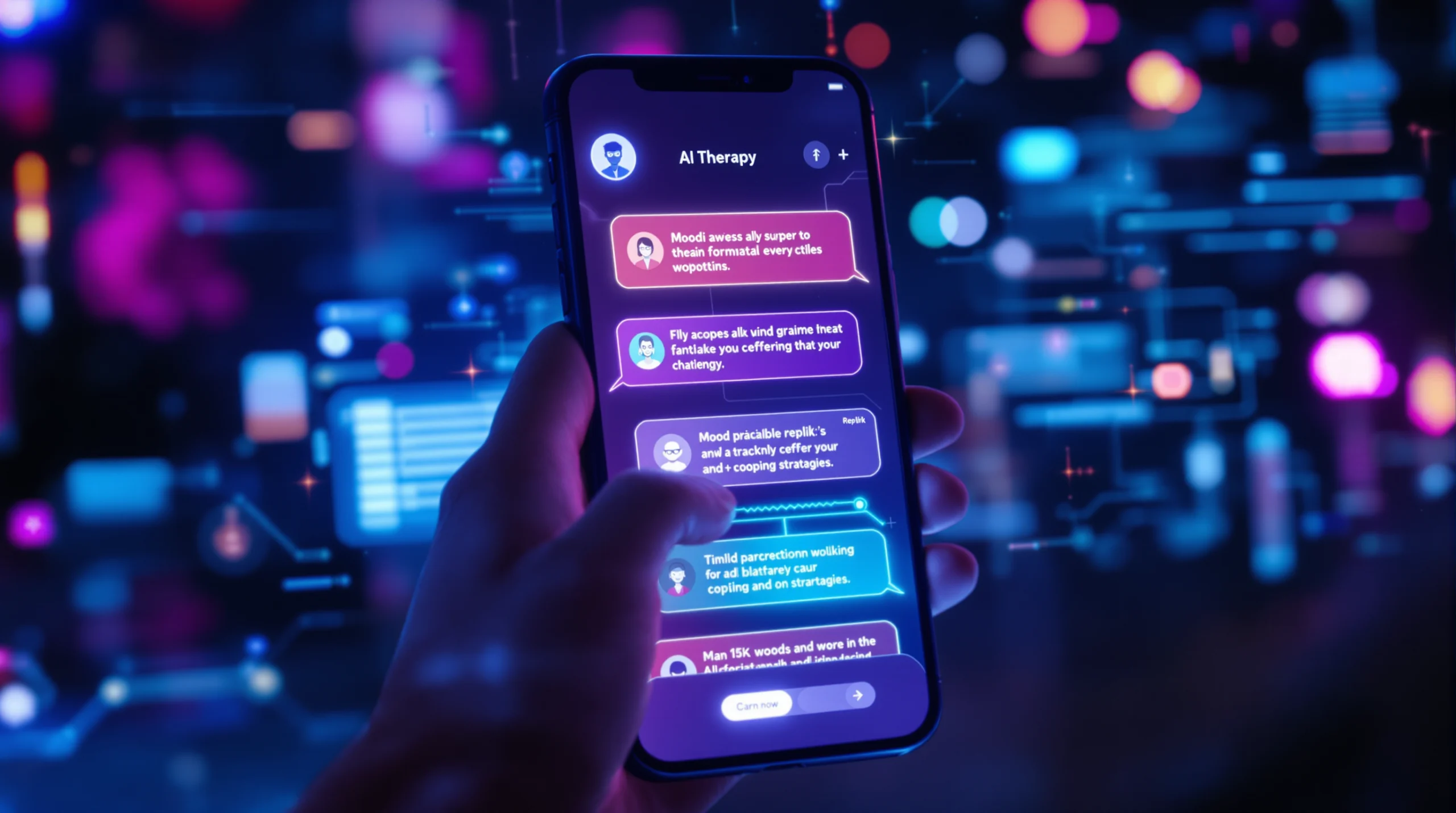
Top AI Tools for Mental Health: Are AI Therapy Chatbots Really Helpful?
AI tools are changing how we approach mental health care, offering new ways to get support when we need it. Let’s dive into some honest answers about these digital mental health assistants and whether they’re worth your time.
What are AI therapy chatbots?
AI therapy chatbots are digital applications designed to provide mental health support through conversation. They use artificial intelligence to respond to your messages, track your mood, and offer coping strategies.
Popular options include Woebot, Wyze, and Replika – each bringing something different to your mental health journey.
These aren’t just text messaging apps. They’re programmed with psychological principles and can guide you through evidence-based techniques like cognitive behavioral therapy exercises.
While exploring different AI tools for business, I’ve noticed that mental health applications are becoming some of the most impactful ones on the market.
Can AI chatbots actually help with mental health issues?
Research shows AI chatbots can be genuinely helpful for mild to moderate mental health concerns like:
– Anxiety management
– Stress reduction
– Mood tracking
– Building coping skills
– Mindfulness practice
A 2022 study in JMIR Mental Health found that regular users of therapy chatbots reported decreased symptoms of anxiety and depression after 8 weeks.
The key benefit? Consistency. Unlike humans, chatbots never get tired, judgmental, or forget what you told them last week.
I’ve seen firsthand how AI tools can transform support systems when used appropriately – they don’t replace therapists but can fill crucial gaps.
When should I use an AI therapy chatbot versus seeing a real therapist?
AI chatbots work best as a complement to professional care, not a replacement. Here’s when each option makes sense:
Use an AI chatbot when:
– You need support outside office hours
– You want to track daily mood patterns
– You’re practicing coping skills between therapy sessions
– You’re on a waiting list for in-person therapy
– You’re dealing with mild anxiety or stress
See a human therapist when:
– You’re experiencing severe symptoms
– You’re in crisis or having thoughts of self-harm
– You need complex trauma treatment
– You want to work through relationship issues
– You need medication management
The right approach often combines both. Think of AI tools like AdCreative.ai – they don’t replace human creativity but amplify it. Similarly, AI chatbots don’t replace therapists but extend their reach.
Are AI therapy chatbots private and secure?
Privacy concerns are valid with any digital mental health tool. Here’s what you should know:
Most reputable AI therapy applications:
– Use encryption for your conversations
– Have clear privacy policies about data usage
– Allow anonymous usage options
– Comply with health information protection standards
But no system is perfect. Before using any AI mental health tool, read their privacy policy carefully and consider:
– What data they collect
– How long they store your conversations
– Whether they share information with third parties
– If they use your data to train their AI
I always recommend checking trusted reviews of AI tools before sharing sensitive information with them.
What limitations do AI therapy chatbots have?
Let’s be real about what these AI tools can’t do:
They can’t pick up on subtle cues like body language or tone of voice.
They don’t truly understand the human experience of emotions.
Their responses can sometimes feel generic or miss the context.
They might not recognize a mental health crisis that requires immediate intervention.
They can’t provide the human connection that’s often central to healing.
One user told me: “My chatbot is great for daily check-ins, but when I was going through my breakup, its responses felt hollow. That’s when I knew I needed my therapist.”
How much do AI therapy chatbots cost compared to traditional therapy?
The cost difference is substantial:
AI Therapy Chatbots:
– Many offer free basic versions
– Premium features typically range from £5-£20 monthly
– No insurance required
– No waiting lists
Traditional Therapy:
– £50-£150 per session in the UK
– Limited sessions covered by NHS
– Private insurance may cover some costs
– Often has waiting lists
This makes AI chatbots an accessible starting point for many people who can’t afford traditional therapy or are waiting for NHS appointments.
AI tools are often more affordable than their human counterparts, which is one reason they’re gaining popularity.
How do I get started with an AI therapy chatbot?
Getting started is straightforward:
1. Research reputable options (Woebot, Wysa, Replika, BetterHelp’s digital tools)
2. Download the app or create an account
3. Complete any initial questionnaires about your mental health needs
4. Set up regular check-in reminders
5. Be honest in your interactions – the AI works better with genuine information
6. Use it consistently for at least 2-3 weeks to see benefits
7. Remember its limitations and seek human help when needed
Many people find it helpful to set a regular “chat time” each day, almost like journaling with feedback.
If you’re interested in how AI can help in other areas, AdCreative.ai is a tool that businesses use to create marketing content – showing how AI tools can support different aspects of our personal and professional lives.
Will AI therapy eventually replace human therapists?
Simply put: no.
AI therapy chatbots will continue to grow more sophisticated, but they’re evolving to work alongside human therapists, not replace them.
What we’re seeing emerge is a tiered mental health system where:
– AI tools handle daily support and reinforcement
– Digital human therapists provide video sessions for moderate needs
– In-person specialists focus on complex cases and crisis intervention
This hybrid approach means more people can access some form of mental health support, regardless of their location or financial situation.
AI tools for mental health are making support more accessible than ever before, but they work best when they complement rather than replace human connection.
Written by Hayley Brown, owner of allin1app.com, lover and obsesser of all things AI and automation and provides significant added value for readers including how to set up time saving automations using https://www.make.com/en/register?pc=hayleyallin1